Layers of Stone: Architecting a Personal Bitcoin Security System That Holds Under Pressure

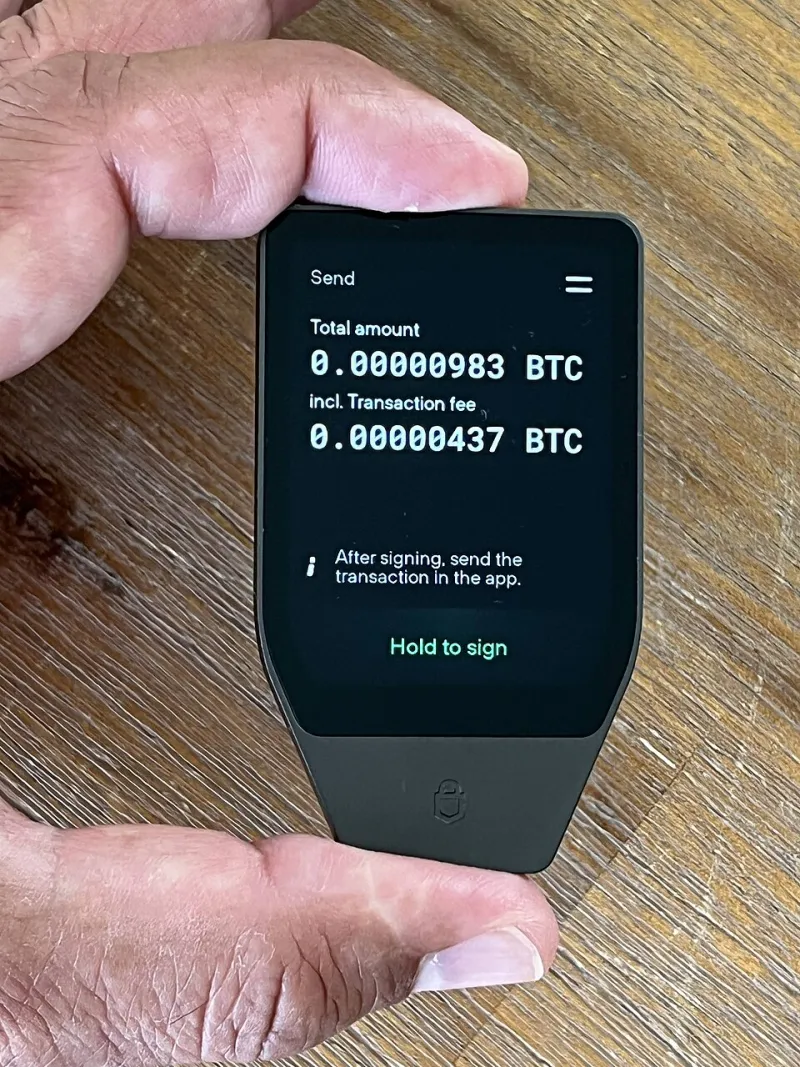
Photo: FingerWiki, CC BY-SA 4.0, via Wikimedia Commons
Every enduring fortress in history shared one defining characteristic: it was never defended by a single wall. From the concentric rings of Carcassonne to the layered bastions of West Point, serious strongholds were built with redundancy in mind. The same principle applies—with equal urgency—to the protection of Bitcoin holdings in 2024. A single hardware wallet or a memorized password is not a security strategy. It is a single wall standing alone in an open field.
Constructing a genuine defense requires deliberate architecture: multiple independent layers, each designed to slow or stop a different category of threat. What follows is a blueprint for that architecture, organized from the outermost perimeter inward to the deepest vault.
The Moat: Hardening Your Network Perimeter
Before an attacker can reach your Bitcoin, they must first cross your network. This outermost layer of defense is frequently underestimated by individual holders, who assume their home router and default ISP settings provide adequate separation from the outside world.
They do not.
A dedicated VPN—preferably one that does not log traffic and operates under US jurisdiction with a clear no-cooperation policy—should be considered baseline infrastructure for any device used to access cryptocurrency accounts. Public Wi-Fi networks, including those at airports, hotels, and coffee shops, should be treated as hostile territory. Transactions should never be broadcast or wallets accessed on unsecured connections.
Beyond the VPN, consider segmenting your network. A dedicated device used exclusively for cryptocurrency management—never for general browsing, email, or social media—dramatically reduces the attack surface available to malware and phishing campaigns. This is not paranoia; it is perimeter discipline.
The Outer Walls: Encryption and Device Security
Once the network layer is secured, attention turns to the devices themselves. Full-disk encryption should be enabled on every machine that touches your Bitcoin ecosystem. On macOS, FileVault accomplishes this with minimal friction. On Windows, BitLocker provides comparable protection. Both are effective, provided the encryption keys themselves are stored securely—not on the same device.
Strong, unique passwords generated by a reputable password manager form the mortar between these stones. Password reuse remains one of the most common vectors through which cryptocurrency accounts are compromised. A breach at any third-party service—an exchange, a newsletter, a forum—can cascade into a full account takeover if credentials are shared.
Operating system updates, though mundane, represent genuine security patching. Delaying them is equivalent to leaving a known crack in the outer wall unrepaired.
The Guardhouse: Authentication Layers
Two-factor authentication functions as the guardhouse of your digital fortress—a checkpoint that requires a second form of verification before granting entry. Not all 2FA implementations are equal, however, and this distinction matters enormously.
SMS-based 2FA, while better than nothing, is vulnerable to SIM-swapping attacks, a form of social engineering that has been used to drain cryptocurrency accounts across the United States. Attackers contact a mobile carrier, impersonate the account holder, and redirect the phone number to a device they control—intercepting every text message in the process.
Hardware security keys, such as those conforming to the FIDO2 standard, provide a substantially more robust checkpoint. These physical devices must be present at the time of authentication and cannot be intercepted remotely. For high-value accounts, a hardware key should be considered mandatory rather than optional.
Time-based one-time password (TOTP) applications—Google Authenticator, Authy, or similar—occupy a middle tier. They are significantly more resistant to SIM-swapping than SMS codes but remain software-based and therefore theoretically susceptible to device compromise.
The Inner Walls: Seed Phrase Storage and Multi-Signature Architecture
This is where the architecture becomes most consequential. The seed phrase—typically twelve or twenty-four words generated when a hardware wallet is initialized—is the master key to everything. Its storage deserves treatment commensurate with that responsibility.
Writing a seed phrase on a single piece of paper and storing it in a desk drawer is not a security strategy. It is a liability. Paper burns, floods, and deteriorates. It can be photographed in seconds by anyone who gains physical access.
Durable metal storage solutions—steel plates or capsules designed to withstand fire and water damage—provide substantially greater physical resilience. These are commercially available and represent one of the highest-return investments a Bitcoin holder can make relative to their cost.
Geographic distribution compounds this resilience. Storing copies of critical backup information in two or three physically separate locations—a home safe, a bank safe deposit box, a trusted family member's property—ensures that no single disaster eliminates all recovery options simultaneously.
For holdings above a threshold where the complexity is justified, multi-signature wallet configurations elevate this layer further. A 2-of-3 multisig arrangement, for instance, requires any two of three designated keys to authorize a transaction. This eliminates the single point of failure inherent in standard single-key wallets. Even if one key is compromised or lost, the funds remain inaccessible to an attacker and recoverable by the legitimate holder.
The Vault: Inheritance and Emergency Recovery Planning
The deepest chamber of any serious fortress is reserved for its most critical contents—and for the instructions governing access when extraordinary circumstances arise. In Bitcoin security, this corresponds to inheritance planning and emergency recovery protocols.
A Bitcoin holder who dies without communicating recovery procedures leaves their heirs facing a potentially insurmountable technical barrier. Unlike a bank account, there is no institution to petition, no probate process that unlocks a hardware wallet. The funds simply become inaccessible.
Addressing this requires a documented recovery plan stored securely and communicated to at least one trusted individual. This document need not expose the seed phrase directly—it can instead outline the location of backup materials, the structure of any multisig arrangement, and the identity of any technical advisors who can assist.
Attorneys specializing in digital asset estate planning are an increasingly available resource in the United States, and engaging one is a prudent step for any holder with significant exposure.
The Psychological Layer: Guarding Against Social Engineering
No architectural blueprint is complete without acknowledging the human element. Social engineering—the manipulation of individuals into voluntarily surrendering access or information—bypasses every technical control described above. It targets the person, not the system.
Common vectors include phishing emails impersonating exchanges or wallet providers, fraudulent customer support interactions, and increasingly sophisticated deepfake communications. The discipline required to resist these attacks is not technical; it is behavioral. Verify independently. Never click links in unsolicited communications. Treat urgency as a red flag rather than a prompt to act.
A fortress is only as strong as the judgment of those who staff it.
Building Stone by Stone
No holder needs to implement every layer described here simultaneously. The appropriate starting point is an honest assessment of current exposure: What is the value at risk? What is the most likely threat vector? What single change would most meaningfully reduce that risk?
From that foundation, each additional layer compounds the protection already in place. Security, like any enduring structure, is built incrementally—stone by stone, layer by layer—until the whole becomes genuinely formidable.