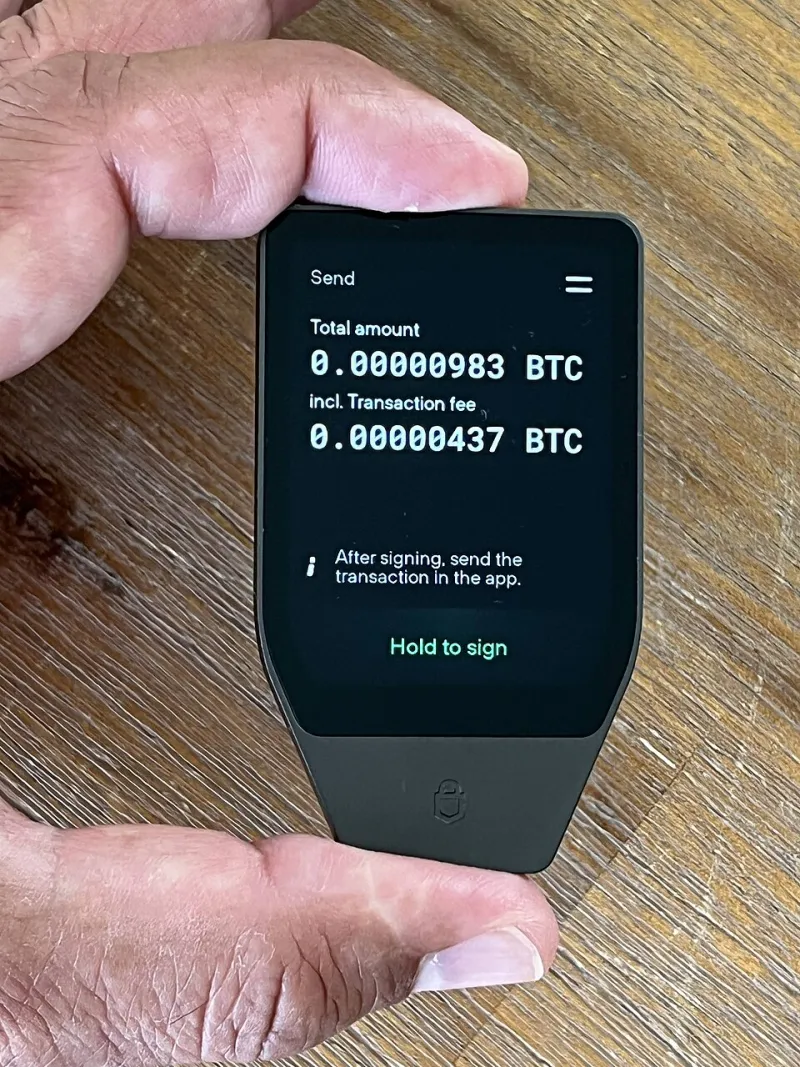
After the Breach: A Practical Recovery Guide for Americans Who've Lost Access to Their Bitcoin
Photo: Stephen Mckelvey, CC0, via Wikimedia Commons
The moment of realization is rarely dramatic. It arrives quietly—a hardware wallet that no longer responds, a seed phrase backup that cannot be located, a login screen that rejects every combination of credentials you can recall. For a growing number of Americans, that quiet moment carries enormous financial weight.
Estimates vary widely, but industry analysts have suggested that millions of Bitcoin are effectively inaccessible due to lost credentials, deceased holders, and compromised accounts. The problem is not abstract, and it is not confined to early adopters who stored keys on obsolete hardware. It is happening now, to people who considered themselves reasonably careful.
This piece does not offer false reassurance. Some Bitcoin, once lost, cannot be recovered. But a significant portion of inaccessible holdings can be reclaimed—provided the holder responds methodically rather than reactively. What follows is that methodology.
Step One: Stop, Assess, and Contain
The instinct in a crisis is to act immediately. In cryptocurrency recovery, that instinct frequently causes additional harm. Before attempting any recovery procedure, pause and conduct a clear-eyed assessment of the situation.
First, determine precisely what has been lost or compromised. These are meaningfully different scenarios requiring different responses:
- Lost or forgotten password or PIN on a hardware or software wallet
- Lost or damaged seed phrase backup
- Compromised account credentials at an exchange or custodial service
- Active theft in progress—a wallet draining in real time
If you believe an active compromise is underway—if you are watching unauthorized transactions occur—the immediate priority is containment. Transfer any remaining accessible funds to a new, clean wallet immediately. Do not pause to investigate; move first, analyze afterward.
For all other scenarios, the urgency is lower, and deliberate action will consistently outperform panicked improvisation.
Step Two: Exhaust Your Own Resources First
Before engaging any external service, conduct a thorough internal audit. The majority of "lost" seed phrases and passwords are not lost—they are misplaced or partially remembered.
Check every location where you might have stored backup information: physical notebooks, filing cabinets, safe deposit boxes, email drafts, cloud storage, password manager vaults, and photographs on old devices. Many holders create backups during wallet setup and promptly forget where those backups were stored.
For forgotten PINs or passwords, document every variation you might plausibly have used—including old passwords from the period when the wallet was created, common modifications you apply to passwords, and any patterns you recognize in your own habits. Hardware wallets typically allow a limited number of PIN attempts before triggering a lockout or wipe, so do not guess repeatedly without a structured approach.
For software wallets, the wallet application itself may retain encrypted data that becomes accessible if the correct password is supplied. The wallet file has not been destroyed—only locked.
Step Three: Understand What Professional Recovery Services Can and Cannot Do
A legitimate professional recovery service can assist in specific, technically defined scenarios. Understanding those scenarios prevents both false hope and missed opportunities.
Reputable firms specializing in cryptocurrency recovery employ techniques including:
- Password permutation attacks: Systematically testing variations of a remembered partial password against an encrypted wallet file
- Seed phrase reconstruction: Recovering a complete seed phrase from a partially remembered or partially damaged backup
- Hardware forensics: Extracting data from damaged or malfunctioning storage devices
What these services cannot do is reverse confirmed blockchain transactions, recover funds that have already been moved to an unknown address, or reconstruct a seed phrase from nothing. The blockchain is immutable. Transactions that have been broadcast and confirmed are permanent.
When evaluating recovery services, exercise significant caution. This space attracts a disproportionate number of fraudulent operators who target distressed holders. Legitimate firms do not require you to transfer funds to them, do not guarantee recovery before examining your specific case, and do not request your seed phrase directly. Any service asking for your seed phrase under the guise of recovery is attempting theft, not recovery.
Verify credentials independently. Look for firms with verifiable track records, professional references, and transparent fee structures. Several legitimate recovery specialists operate within the United States and are willing to provide documented case histories upon request.
Step Four: Understand Your Legal Options
For holders whose Bitcoin was stolen through fraud, exchange insolvency, or identifiable criminal activity, legal recourse is a genuine option—though a complex one.
The FBI's Internet Crime Complaint Center (IC3) accepts reports of cryptocurrency theft and fraud. While federal law enforcement prioritizes cases involving large sums or organized criminal networks, filing a report creates an official record that may become relevant if a broader investigation develops.
Blockchain forensics firms, several of which work directly with law enforcement agencies, can trace the movement of stolen funds across the blockchain. This tracing capability does not automatically result in recovery, but it can identify exchange addresses where stolen funds were deposited—creating potential leverage through legal process.
Attorneys specializing in cryptocurrency litigation are an increasingly available resource in major US markets. If your loss involves an identifiable counterparty—a fraudulent platform, a compromised exchange, or a known individual—civil litigation may be viable. Document everything: transaction records, communications, screenshots, and account statements.
Step Five: Engage the Exchange, If Applicable
If your inaccessible funds are held at a centralized exchange rather than in a self-custody wallet, the recovery pathway is meaningfully different. Exchanges maintain customer support infrastructure and, in most cases, identity verification records that can be used to restore account access.
Contact support through official channels only—never through links in emails or social media messages purporting to be from the exchange. Prepare to provide identity documentation, proof of account ownership, and a detailed account of the circumstances.
Be patient. Exchange support queues for access recovery are often lengthy, and the process may require multiple rounds of verification. Persistence through official channels, however, is more productive than attempting to escalate through unofficial means.
Step Six: Build a Better Fortress Before You Recover
This step is not contingent on successful recovery. Whether or not you reclaim access to your current holdings, the experience of a security failure carries an irreplaceable lesson: the architecture you had was insufficient.
Before redeploying any recovered funds—or depositing new capital—invest the time to construct the layered security infrastructure that would have prevented this situation. Document your seed phrase on durable metal storage. Distribute backups geographically. Enable hardware-key 2FA. Create a written recovery plan that a trusted person can execute on your behalf.
A fortress that has been breached and rebuilt is often stronger than one that was never tested. The breach, as painful as it is, provides the clearest possible specification for what the next structure must withstand.
A Measured Perspective
The cryptocurrency recovery space is populated by both genuine expertise and predatory opportunism, and the distress of a recent loss makes holders vulnerable to both. Approach every external service with skepticism proportional to the stakes involved.
Not every loss is recoverable. But many are. The difference, in most cases, comes down to whether the holder responds with disciplined methodology or with reactive desperation. Take the time to assess accurately, exhaust internal options thoroughly, and engage external resources selectively and carefully.
The fortress can be rebuilt. Begin with the foundation.