Cold Storage, Iron Gates: The Hardware Wallet Technologies Guarding Bitcoin's Most Serious Holders
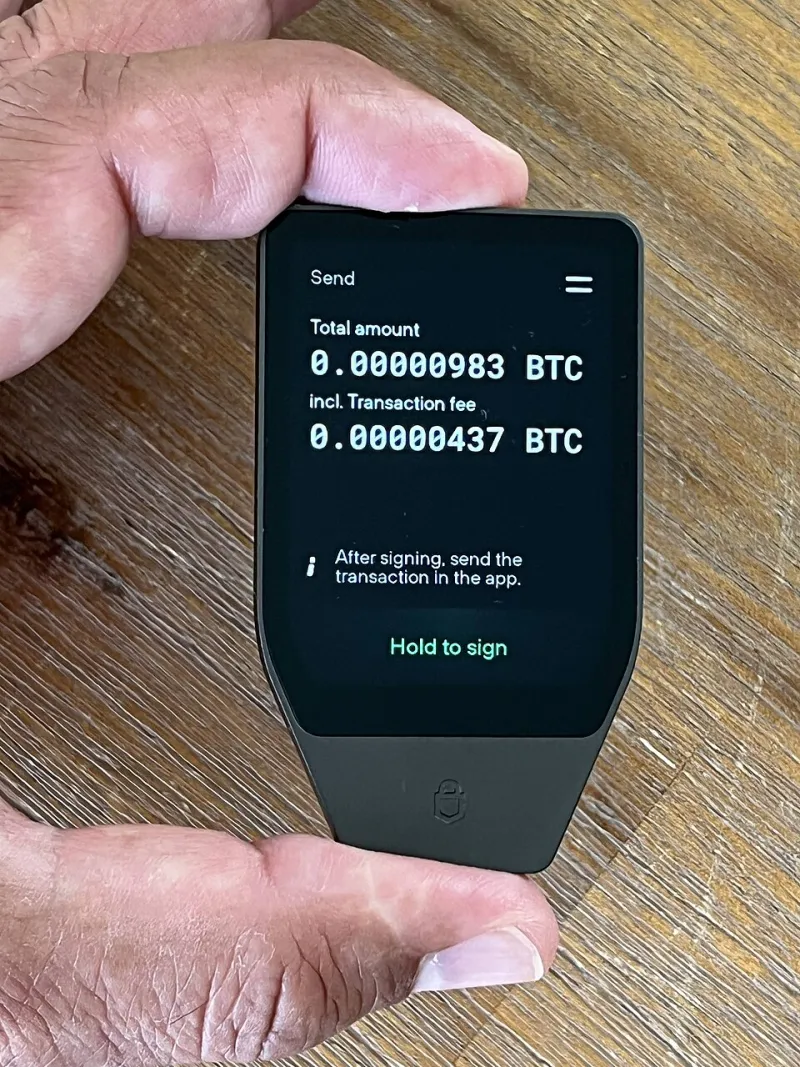
Photo: FlippyFlink, CC0, via Wikimedia Commons
There is a reason serious Bitcoin holders do not leave their private keys on an exchange or a software application. The internet, for all its utility, is a contested battlefield — one where adversaries range from opportunistic script kiddies to sophisticated state-sponsored actors. Against that threat landscape, a hardware wallet functions much like a reinforced vault door: it does not negotiate, it does not yield to social pressure, and it does not connect to the network unless you explicitly authorize it to do so.
For Americans building meaningful Bitcoin positions, understanding the mechanics behind hardware wallet security is not optional — it is foundational.
What Makes a Hardware Wallet Fundamentally Different
At its core, a hardware wallet is a purpose-built microcontroller device designed to generate and store cryptographic private keys entirely offline. Unlike a mobile app or desktop client, the private key never leaves the device in plaintext form. When you initiate a transaction, the signing process occurs within the device's secure element or microcontroller, and only the signed transaction — not the key itself — is transmitted outward.
This architectural distinction is not a minor technical footnote. It is the entire basis of the device's security model. Even if the computer you plug the hardware wallet into is thoroughly compromised by malware, the attacker cannot extract your private key. The signed transaction they might intercept is useless without the key that produced it.
This principle is sometimes described as "air-gapping" — a term borrowed from high-security computing environments where sensitive systems are physically isolated from external networks. The most advanced hardware wallets take this concept even further by eliminating the USB connection entirely, communicating instead via QR codes or microSD cards.
The Cryptographic Foundation: Elliptic Curves and Secure Elements
Bitcoin's security rests on elliptic curve cryptography, specifically the secp256k1 curve. A private key is a 256-bit integer — essentially a number so astronomically large that brute-forcing it is computationally infeasible by any known means. The public key and, subsequently, your Bitcoin address are derived from this private key through a one-way mathematical function.
Hardware wallets protect this private key using one or more layers of physical and logical security:
- Secure Element Chips: Devices such as the Ledger Nano X incorporate certified secure element chips (similar to those found in credit cards and passports) that are hardened against physical tampering, side-channel attacks, and fault injection. These chips are independently certified under standards like Common Criteria EAL5+.
- PIN Protection and Wipe Mechanisms: Most hardware wallets enforce a PIN entry requirement and will wipe the device after a defined number of incorrect attempts, rendering stolen hardware useless.
- BIP-39 Seed Phrases: Upon setup, devices generate a 12- or 24-word recovery seed phrase derived from the BIP-39 wordlist. This seed is the master key to your fortress — lose it, and access is permanently forfeited; expose it, and your walls crumble instantly.
Comparing the Leading Hardware Wallets Available to US Buyers
The market has matured considerably, and US investors now have several credible options. Each carries distinct trade-offs between convenience, security architecture, and open-source transparency.
Ledger Nano X and Nano S Plus Ledger remains the most widely adopted hardware wallet brand globally. The Nano X offers Bluetooth connectivity for mobile use, while the Nano S Plus is a more affordable, USB-only alternative. Ledger's use of a proprietary secure element chip has drawn scrutiny from open-source advocates, as the chip's firmware cannot be fully audited. The company's 2020 customer data breach — which exposed user email and mailing addresses — did not compromise private keys but served as a reminder that peripheral security matters as well.
Trezor Model T and Model One Trezor, produced by SatoshiLabs, takes a fully open-source approach to both hardware and firmware. The Model T features a touchscreen interface and supports a broader range of cryptocurrencies. Because Trezor does not use a dedicated secure element chip, it theoretically carries a higher risk of physical extraction attacks — though such attacks require sophisticated equipment and physical device access.
Coldcard Mk4 For Bitcoin-only purists, the Coldcard Mk4 represents perhaps the most security-hardened consumer device available. It supports fully air-gapped operation via microSD, features a secure element, and offers advanced options such as duress PINs and brick-me codes. Its interface is less beginner-friendly, but for high-value holdings, the trade-off is well worth the learning curve.
Foundation Passport Another Bitcoin-only device, the Passport prioritizes open-source transparency and air-gapped operation. It communicates exclusively via QR codes and microSD, making it one of the most network-isolated options on the market.
Setting Up Your Hardware Wallet: A Methodical Approach
Acquiring a hardware wallet is only the first stone in your security foundation. The setup process demands the same deliberate care as the device itself.
- Purchase directly from the manufacturer. Third-party resellers introduce supply-chain risk. Tampered devices have been documented in the wild.
- Verify the device's integrity upon arrival. Most manufacturers include tamper-evident packaging or firmware attestation features. Use them.
- Generate your seed phrase in a private, offline environment. Do not photograph it. Do not type it into any digital device. Write it by hand on paper — or better, engrave it on a steel backup plate designed for fire and water resistance.
- Store your seed phrase in a geographically separate location from your device. A safe deposit box, a fireproof home safe, or a trusted attorney's document storage are all reasonable options depending on your holdings.
- Test your recovery process before depositing significant funds. Send a small amount to the wallet, wipe the device, and restore from your seed phrase. Confirm the process works before the stakes are high.
The Ongoing Duty of Vigilance
A hardware wallet is not a set-and-forget solution. Firmware updates address newly discovered vulnerabilities and should be applied promptly — though always verify the update through official manufacturer channels before proceeding. Physical security of both the device and the seed phrase backup must be reviewed periodically as life circumstances change.
For Americans holding Bitcoin as a long-term store of value, the hardware wallet is the cornerstone of a sound custody strategy. It will not protect against every conceivable threat — no single measure does — but it erects a barrier that the vast majority of adversaries will never breach. In the architecture of digital asset security, it is the keep at the center of the fortress: the last line, and often the only one that truly matters.