Cracked Walls and Open Gates: The Bitcoin Security Mistakes Costing Americans Dearly — And the Fortification Plan to Fix Them

Photo: Kwameghana(Bright Kwame Ayisi), CC0, via Wikimedia Commons
Let's be direct: the average American Bitcoin holder is operating with the digital equivalent of a screen door on a bank vault. They may own a meaningful amount of the world's most powerful decentralized monetary asset, and they are protecting it with a recycled password and a vague sense that their exchange's security team has things covered.
They do not.
This is not a criticism of character — it is a structural problem. Traditional financial institutions have spent decades conditioning Americans to outsource security responsibility. Banks have fraud departments. Credit cards have chargebacks. Bitcoin has neither. On this network, self-sovereignty and self-responsibility are inseparable. If your Bitcoin is taken, there is no customer service line. There is no dispute resolution. The transaction is final.
The good news: the most damaging security failures are entirely preventable. Below is an honest accounting of where American Bitcoin holders go wrong — and a concrete roadmap to building something genuinely defensible.
Mistake #1: Leaving Bitcoin on an Exchange Indefinitely
This is the single most common and most consequential error. Centralized exchanges — regardless of their reputation — are honeypots. They hold billions of dollars in customer assets, which makes them perpetual targets. Mt. Gox. Bitfinex. FTX. The graveyard of failed or compromised exchanges is long, and it is not finished filling.
When your Bitcoin sits on an exchange, you do not hold Bitcoin. You hold an IOU from a company that may be mismanaged, hacked, insolvent, or operating in regulatory gray zones. The phrase "not your keys, not your coins" has become a cliché precisely because it is true.
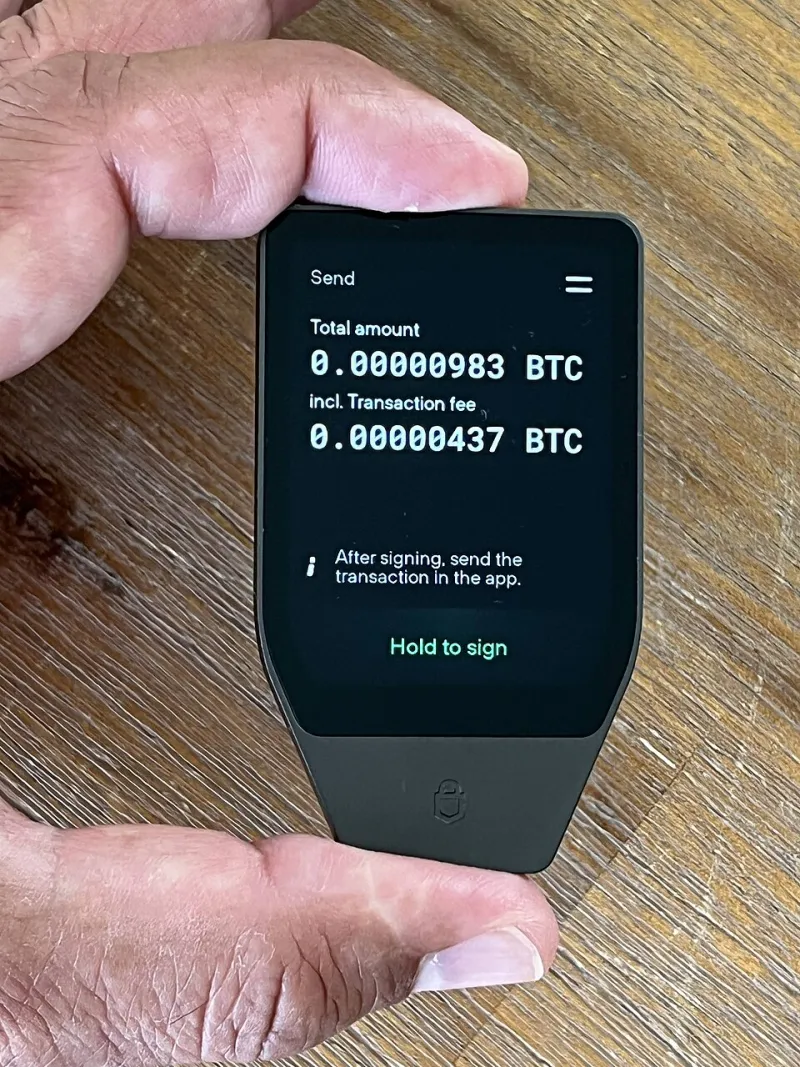
The fix: Withdraw any Bitcoin you do not intend to trade in the near term to a self-custodied wallet. For amounts above a few hundred dollars, a hardware wallet is appropriate. For long-term holdings, cold storage with a properly secured seed phrase backup is the standard.
Mistake #2: Using Weak or Reused Passwords
A significant portion of cryptocurrency account compromises do not involve sophisticated hacking — they involve credential stuffing. Attackers purchase databases of leaked username and password combinations from previous data breaches and attempt them against cryptocurrency exchanges and wallets. If you have used the same password across multiple services, your exposure is likely broader than you realize.
The fix:
- Use a reputable password manager (Bitwarden, 1Password, and similar tools are well-regarded) to generate and store unique, complex passwords for every account.
- Never reuse passwords between financial accounts and any other service.
- Check your email addresses against HaveIBeenPwned.com to assess existing exposure.
Mistake #3: Neglecting Two-Factor Authentication — Or Using the Wrong Kind
SMS-based two-factor authentication is better than nothing. It is not, however, adequate for protecting cryptocurrency accounts. SIM-swapping attacks — where a criminal convinces a mobile carrier to transfer your phone number to their device — have been used to drain Bitcoin accounts in the tens of millions of dollars. US carriers have improved their protocols, but the attack vector remains active.
The fix: Disable SMS-based 2FA on all cryptocurrency-related accounts wherever possible. Replace it with an authenticator application (Google Authenticator, Authy, or ideally a hardware security key such as a YubiKey). A hardware security key provides phishing-resistant authentication that is substantially more difficult to circumvent.
Mistake #4: Storing Seed Phrases Digitally
Photographing your seed phrase. Emailing it to yourself. Saving it in a notes application. Typing it into a cloud-synced document. Each of these behaviors effectively negates the security model of your hardware wallet entirely. If your seed phrase is on any internet-connected device or cloud service, your Bitcoin's security is only as strong as that service's defenses.
The fix: Your seed phrase should exist exclusively in physical form, stored in a location that is both secure and accessible to you (or a designated trusted party) in an emergency. Steel backup plates — designed to survive fire, flooding, and physical damage — are available from multiple manufacturers and represent a modest investment relative to what they protect.
Mistake #5: Falling for Social Engineering Attacks
Phishing emails impersonating exchanges. Fake customer support representatives on social media. Discord and Telegram users offering "wallet recovery assistance." Fraudulent giveaway promotions amplified through compromised accounts. Social engineering attacks targeting cryptocurrency holders are extraordinarily sophisticated, and they do not require any technical vulnerability — only a moment of distraction or trust.
A notable pattern in the US involves attackers posing as IRS representatives or legal authorities, claiming the target's Bitcoin must be transferred to a "secure government wallet" pending investigation. This is not a real government process. It is fraud.
The fix: Adopt a posture of structured skepticism. No legitimate exchange, wallet provider, government agency, or technical support team will ever ask for your private key or seed phrase. None. If a communication creates urgency around your Bitcoin, treat that urgency as a red flag, not a reason to act quickly.
Mistake #6: Failing to Plan for Inheritance and Incapacitation
This mistake is rarely discussed and frequently devastating. Americans who hold Bitcoin without any documented access plan leave their heirs in an impossible position. Unlike a brokerage account, there is no institution to contact and no legal mechanism to recover access. If the holder is incapacitated or deceased and the seed phrase is unknown or inaccessible, the Bitcoin is effectively gone.
The fix: Establish a documented access plan — ideally reviewed by an attorney familiar with digital asset estate planning. This does not require revealing your seed phrase to anyone directly; structured approaches using multi-signature wallets or sealed legal documents can provide access to heirs without compromising security during your lifetime.
Your Fortification Checklist: Implement This Week
Security is not an event. It is a practice. The following actions, taken in order, will meaningfully strengthen your position:
- Withdraw exchange holdings above your active trading balance to self-custody
- Audit every password associated with cryptocurrency accounts and replace reused or weak passwords via a password manager
- Replace SMS-based 2FA with an authenticator app or hardware security key on all financial and crypto accounts
- Confirm your seed phrase backup is stored in physical form only, in a secure and disaster-resistant location
- Review your email addresses on HaveIBeenPwned.com and act on any identified exposures
- Establish a basic inheritance or incapacitation access plan for your digital assets
- Conduct a social engineering self-audit: examine recent unsolicited communications related to your crypto accounts with fresh skepticism
Security Is a Discipline, Not a Destination
The most dangerous assumption in Bitcoin security is that a one-time setup is sufficient. Threat landscapes evolve. Circumstances change. Devices age. The holders who maintain meaningful security over years and decades are those who treat it as an ongoing discipline — revisiting their practices quarterly, staying informed about emerging attack vectors, and adjusting their defenses accordingly.
Building a fortress does not happen in an afternoon. But every stone placed deliberately is a stone that stands. Begin today.