Walls Before the Storm: Positioning Your Bitcoin Holdings for the Regulatory Pressures Reshaping American Crypto
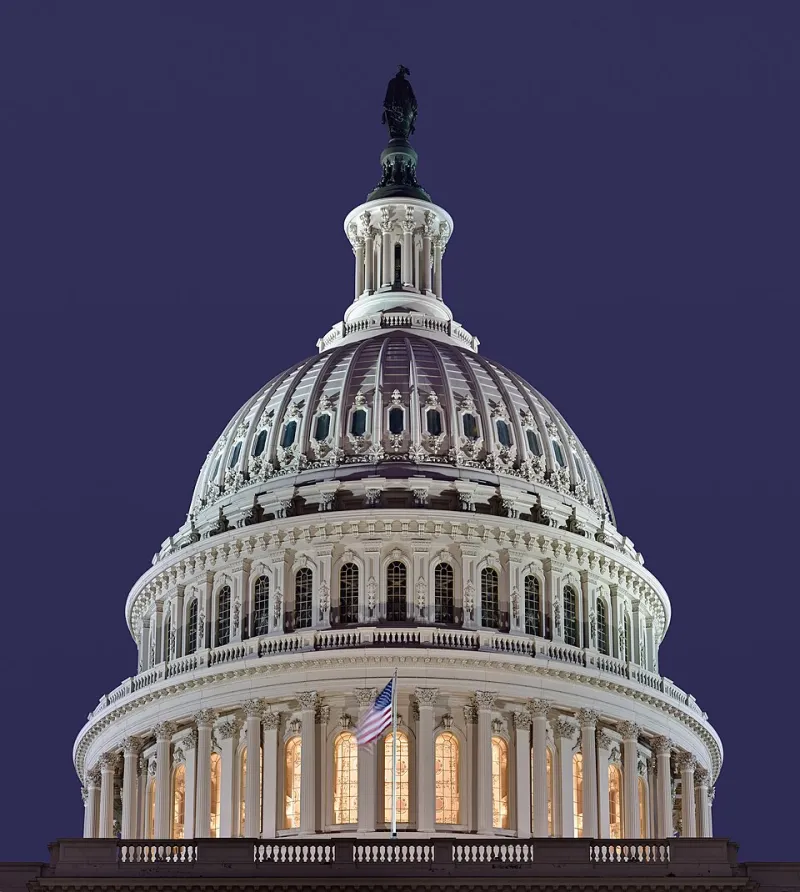
Photo: Diliff, CC BY 2.5, via Wikimedia Commons
Fortresses are not built during sieges. They are constructed in periods of relative calm, when builders have the luxury of deliberate planning, quality materials, and time to identify structural weaknesses before an adversary does. American Bitcoin holders who have watched the regulatory environment evolve over the past several years — and who are paying attention to the signals emerging from Washington today — understand that this is precisely the moment to reinforce their positions.
The storm is not hypothetical. It is forming.
The Regulatory Pressure Map
To understand what preparation is required, it helps to survey the actual pressures accumulating against Bitcoin holders in the United States.
Expanded reporting obligations represent the most immediate and concrete development. The Infrastructure Investment and Jobs Act of 2021 significantly broadened the definition of a "broker" for cryptocurrency purposes, potentially capturing a wide range of actors — including, in some interpretations, individuals who facilitate peer-to-peer transactions — under Form 1099-DA reporting requirements. While implementation has been phased and contested, the directional intent of Congress is unmistakable: greater transaction-level visibility into cryptocurrency activity.
Know Your Customer (KYC) requirements at regulated exchanges have become substantially more rigorous. Major US platforms now routinely collect government-issued identification, Social Security numbers, and in some cases biometric data as conditions of account access. The practical consequence is that any Bitcoin acquired through a regulated US exchange is, from the moment of purchase, associated with your legal identity in a database subject to subpoena, data breach, or government access request.
Seizure and forfeiture mechanisms deserve serious consideration, even if they remain a distant concern for most holders. The US government has demonstrated both the legal authority and the technical capability to seize Bitcoin — the Department of Justice's recovery of funds from the Colonial Pipeline ransomware attack being among the most prominent examples. While civil asset forfeiture in the context of ordinary Bitcoin holders is not a present reality, the legal infrastructure for such action exists, and its scope could expand depending on how future legislation and court decisions develop.
International information-sharing frameworks, including the OECD's Crypto-Asset Reporting Framework (CARF), are being adopted by an increasing number of jurisdictions. For Americans with holdings or accounts abroad, this means that the information walls between national tax authorities are becoming progressively more permeable.
What This Means for Custody Choices
The single most consequential decision a serious Bitcoin holder can make in response to this regulatory environment is where and how their Bitcoin is held.
Exchange custody — leaving Bitcoin on a platform like Coinbase or Kraken — offers convenience but at a significant cost to both security and privacy. Exchange-held Bitcoin is subject to the platform's own compliance posture, which includes responding to law enforcement requests, freezing accounts under suspicious activity determinations, and in extreme scenarios, cooperating with government seizure orders. The holder who stores Bitcoin on an exchange has effectively delegated the keys — and with them, a meaningful degree of control — to a third party operating under US regulatory oversight.
Self-custody, by contrast, places the holder in direct possession of their private keys. A Bitcoin secured in self-custody cannot be frozen by an exchange compliance officer or seized without direct action against the holder. This is not an argument for evading legitimate legal obligations — it is an acknowledgment that self-custody preserves the property rights that Bitcoin's architecture was designed to protect. For holders concerned about the trajectory of US cryptocurrency regulation, self-custody is not merely a security preference; it is a structural expression of financial sovereignty.
Multisignature arrangements add a further layer of resilience. By requiring multiple independent keys to authorize a transaction, multisig configurations protect against single points of failure — whether that failure is a lost device, a compromised key, or legal pressure applied to a single custodial party. Collaborative custody models, in which a professional co-signer holds one key in a two-of-three arrangement, can provide institutional-grade security without surrendering full control to a regulated custodian.
Geographic Diversification: A Measured Perspective
Some commentators advocate for geographic diversification of Bitcoin custody — storing keys or devices across multiple jurisdictions as a hedge against the regulatory posture of any single country. This is a legitimate consideration for holders with the sophistication and resources to execute it properly, but it warrants a clear-eyed assessment.
For American citizens and residents, Bitcoin held abroad does not escape US tax obligations. The IRS taxes on worldwide income and gains, regardless of where assets are held. Failing to report foreign financial accounts — including certain cryptocurrency accounts — can trigger severe penalties under FBAR and FATCA frameworks. Geographic diversification of custody is not a tax strategy; it is a security and resilience strategy, and it must be executed in full compliance with US reporting requirements.
That said, holding a backup key in a secure location outside the United States — with a trusted attorney or in a private vault — is a reasonable component of a comprehensive security architecture for holders with significant exposure. The goal is not concealment; it is redundancy and resilience against scenarios in which access to domestic holdings might be disrupted.
Documentation as a Defensive Asset
In a regulatory environment that is becoming more demanding, thorough documentation is not merely a compliance obligation — it is a defensive asset. Holders who can produce clean, consistent records of their acquisition history, cost basis, and transaction activity are in a substantially stronger position if they ever face an audit, an inquiry, or a legal challenge.
This means maintaining records that are both accurate and organized: purchase receipts, exchange statements, wallet transfer logs, and contemporaneous fair market value documentation. It also means ensuring that those records are stored securely — encrypted, backed up, and accessible to a trusted representative in the event that the holder is unable to act on their own behalf.
Holders who have engaged estate planning attorneys or financial advisors should ensure those professionals are briefed on the documentation standards required for cryptocurrency holdings. The intersection of regulatory compliance and estate planning is an underappreciated vulnerability in many otherwise well-constructed Bitcoin security strategies.
Building to Code Before the Inspector Arrives
The Bitcoin Fortress concept rests on a foundational conviction: that the time to build is before the threat materializes. Regulatory pressure on American Bitcoin holders is not a future possibility to be monitored from a distance — it is an active and accelerating development that rewards preparation and penalizes complacency.
The holders who will navigate this environment most effectively are not those who ignore regulation or those who surrender every privacy consideration in the name of compliance. They are those who have constructed thoughtful, layered custody arrangements; maintained meticulous, defensible records; engaged qualified legal and tax counsel; and made deliberate choices about where and how their Bitcoin is held — all before the storm arrives at their gates.
The walls need to be standing when the pressure comes. Now is the time to build them.