The Ledger Behind the Wall: Constructing a Secure Bitcoin Net Worth Record That Satisfies Scrutiny Without Surrendering Your Secrets

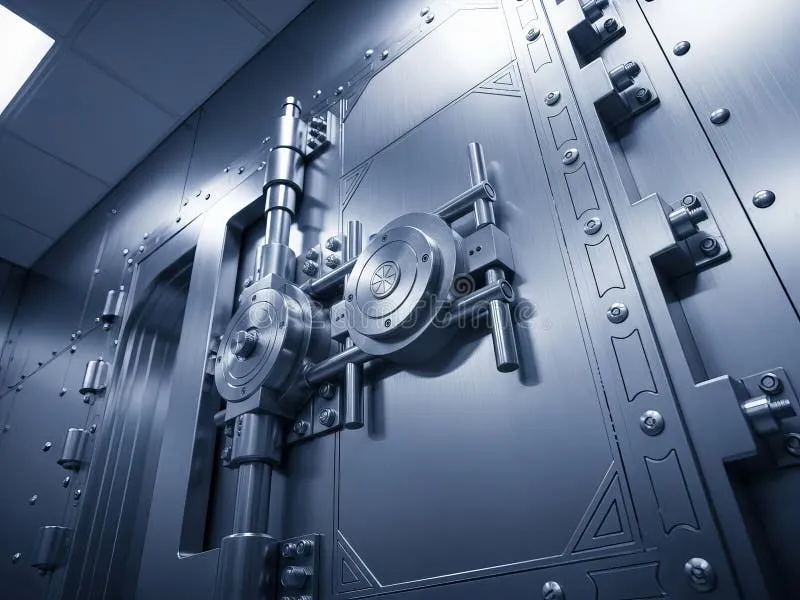
Photo by Photo by Maksym Kaharlytskyi on Unsplash on Unsplash
Every fortress requires a ledger. The garrison commander who cannot account for his stores, his armaments, and his reserves is not operating a fortress—he is operating a liability. Yet the moment that ledger is written carelessly, it becomes the very document that guides an adversary straight to the vault.
This tension sits at the center of a problem that thousands of American Bitcoin holders quietly face: how do you maintain an accurate, updated, legally credible record of what you own without producing a document that exposes how to take it from you?
The answer requires separating two concepts that most people instinctively combine. What you own and where it lives are not the same information. One belongs in a net worth statement. The other belongs nowhere except inside your own memory and a carefully constructed security architecture.
Why Documentation Is Not Optional
Americans who hold meaningful Bitcoin positions will, at some point, encounter institutional pressure to produce records. The IRS expects cost basis documentation and accurate valuation at time of disposition. Divorce proceedings in community property states can compel full financial disclosure. Estate attorneys need asset inventories to construct valid inheritance plans. Lenders extending credit against digital assets require proof of holdings.
The instinct to keep everything undocumented is understandable. It also fails. Attempting to conceal assets during legal discovery is a federal matter. Dying without documented holdings leaves heirs unable to claim what is rightfully theirs. Failing to maintain cost basis records creates tax exposure that compounds over years.
Documentation is a structural requirement of serious Bitcoin ownership. The question is never whether to document—it is how to document intelligently.
The Core Principle: Compartmentalization of Knowledge
A well-constructed Bitcoin inventory operates on the same principle as a classified government briefing: different audiences receive different tiers of information, and no single document contains everything.
Your net worth statement should reflect, with precision, the aggregate market value of your Bitcoin holdings at a given date. It should reference the number of BTC held, the applicable exchange rate used for valuation, and the date of that valuation. It should note, in general terms, that holdings are maintained in self-custody or institutional custody—without specifying which hardware devices, which wallet software, which seed phrase storage methodology, or which physical locations are involved.
What the document must never contain: wallet addresses, seed phrases, device serial numbers, PIN structures, geographic storage locations, or any detail that would allow a reader to locate and access the underlying assets.
This is not evasion. It is appropriate security hygiene. A bank's balance sheet does not describe the location of the vault.
Encrypted Inventory Systems: The Practical Architecture
For holders maintaining multiple wallets, staggered acquisition dates, and complex cost basis records, a plain text spreadsheet is inadequate both for security and for accuracy. Several approaches merit consideration.
Encrypted local files using tools such as VeraCrypt allow holders to maintain detailed spreadsheets—including wallet labels, acquisition dates, cost basis per unit, and current valuations—behind strong encryption on an air-gapped device. The encrypted container can be backed up without exposing its contents. The decryption credentials should never appear in the same location as the file itself.
Password-managed structured notes offer a middle tier. Applications such as Bitwarden or 1Password, when used with strong master credentials and two-factor authentication, allow holders to maintain structured financial summaries. These are appropriate for the valuation and quantity layer of documentation—not for seed phrases or security architecture details.
Paper-based ledgers in physical security, for holders who prefer analog methods, can be maintained in a home safe or bank safe deposit box. The critical discipline here is the same: the ledger records what you own and when you acquired it. It does not record how to access it.
The three-tier model—aggregate valuation document, encrypted detailed inventory, and physically secured access credentials—keeps each layer of information separate from the others while ensuring that each layer is recoverable by authorized parties.
Valuation Methodology: Consistency Is a Legal Asset
US tax and legal proceedings do not require you to use any single valuation source, but they do require consistency. Selecting a reputable price feed—Coinbase spot price, CoinGecko daily close, or a similar established reference—and applying it uniformly across all valuation dates protects you in audit and litigation contexts.
For holders with significant positions, quarterly revaluation is a reasonable cadence for net worth statement purposes. Each revaluation should be timestamped, reference the specific price source used, and be retained as a discrete record. Over time, this creates an auditable valuation history that demonstrates methodological discipline—the kind of documentation that satisfies both accountants and courts.
Cost basis tracking deserves its own dedicated system. Given the IRS's specific identification and FIFO methodologies for cryptocurrency, maintaining a per-lot acquisition record—date, quantity, USD value at acquisition, exchange or transaction source—is essential. This is information that belongs in the encrypted inventory tier, not in any externally shared document.
Tiered Disclosure: Matching Information to Audience
Different contexts demand different levels of detail, and a disciplined holder prepares accordingly.
For a net worth statement shared with a lender or presented in legal proceedings, the appropriate document shows aggregate BTC quantity, current USD valuation, and a brief custody description such as "self-custodied cold storage" or "held at regulated US custodian." Nothing further.
For an estate attorney preparing a will or trust, the appropriate disclosure adds a reference to the existence of a separately secured access instruction document—without including that document in the estate file itself. The estate plan points to the location of the instructions; it does not contain them.
For a spouse in a community property state where full financial disclosure is legally required, the valuation and quantity data must be accurate and complete. Access credentials, however, are not financial data—they are security infrastructure. An attorney familiar with digital asset matters can help structure this distinction appropriately.
The Update Discipline: A Fortress Requires Maintenance
An inventory that was accurate eighteen months ago is a liability today. Bitcoin's price volatility alone means that a stale valuation can misrepresent your financial position by a substantial margin. More critically, any wallet restructuring, hardware upgrade, or custody migration that goes undocumented creates gaps that heirs and authorized parties cannot bridge.
Building a calendar-based review process—quarterly at minimum, monthly for active holders—ensures that both the valuation layer and the detailed inventory layer remain current. Each review is an opportunity to verify that the compartmentalization structure remains intact: that no single document has drifted toward containing information that belongs in a different tier.
Conclusion: The Ledger Is Part of the Fortress
Serious Bitcoin security in the United States is not merely a technical exercise. It is a documentation exercise conducted in parallel. The holder who builds impenetrable cold storage but leaves no coherent record of what they own has constructed half a fortress—and left the other half exposed to the slow erosion of legal, tax, and estate complications.
The goal is documentation that is precise enough to satisfy any legitimate authority, and silent enough to reveal nothing that would compromise the security of the holdings themselves. That balance is achievable. It requires discipline, a clear understanding of what information belongs where, and a commitment to maintaining the structure over time.
Stone by stone, the fortress is built. The ledger is one of those stones—placed carefully, mortared correctly, and visible only to those who need to see it.